
Hot rolling and cold rolling are two processes in steel manufacturing that determine the steel’s quality, applications, and properties. Understanding their differences is crucial because each method has unique advantages and uses, which may require specific project decisions. In this article, we strive to provide you with an all-inclusive analysis of hot-rolled steel and cold-rolled steel, highlighting their production methods, defining features, typical applications, and how one can select the appropriate type based on their distinct needs. If you are a construction, manufacturing, or engineering professional, this guide will help you determine the best suitable steel option to match your requirements.
What are the main differences between hot-rolled and cold-rolled steel?

The differences between hot-rolled and cold-rolled steel lie in the production methods and the resulting characteristics and applications. Hot-rolled steel is processed at higher temperatures, which makes the steel more pliable, allowing for larger sizes. It usually has a coarser surface finish and is used in construction, welding, and other places that don’t need exact dimensions. Cold-rolled steel is processed at room temperature, so it has a smoother finish, tighter tolerances, and better strength. It is also used in finely detailed projects in the automotive and appliance industry.
Comparing surface finish between hot rolled vs cold rolled steel
I’d give the edge to the latter for the surface finish between hot-rolled and cold-rolled steel. Cold-rolled steel is smoother and polished due to room-temperature processes, making it ideal for projects where appearance precision matters. Hot-rolled steel has a rougher surface that is much more varied due to the high-temperature processing and natural cooling. These factors make hot-rolled steel more suitable for large, detail-less applications. Personally, the deciding factor is whether I want precision and aesthetics or strength and cost.
Dimensional tolerance differences in hot and cold rolled steel
Due to different processing methods, hot-rolled and cold-rolled steel differ significantly in dimensional tolerances. As hot-rolled steel is processed at high temperatures, it cools down and contracts slightly, leading to less precise dimensions. For hot-rolled steel, typical dimensional tolerances are around ±0.01 to ±0.1 inches, which vary with the material’s size and shape. This wide range of tolerances makes hot-rolled steel more appropriate for operations where exact measurements are unnecessary.
As the name suggests, cold-rolled steel is processed at room temperature for tighter dimensional accuracy and a smoother surface finish. Dimensional tolerances for cold-rolled steel typically range from ±0.001 to ±0.005 inches, but this varies with the product’s specification. This high precision is ideal for projects that require exact measurements, finer finishes, or complex shapes where consistency is paramount.
In summary, when selecting hot or cold-rolled steel, one should consider these tolerance differences and project requirements such as strength, appearance, and cost. Always check supplier specifications to ensure they align with your project’s requirements to avoid material-related issues.
Tensile strength variations between hot-rolled and cold-rolled steel
Cold-rolled steel has greater tensile strength than hot-rolled steel due to its work hardening during manufacturing. Its strengthening and stabilization make it ideal for more demanding precision and durability applications. Meanwhile, hot-rolled steel is easier to work with and cheaper but has lower tensile strength. This steel is, however, handy for structural pieces where precision is not heavily required.
- Cold-Rolled Steel: The grade and its specific treatment dictate a tensile strength range between 300 MPa to 650 MPa due to further rolling at room temperature.
- Hot-Rolled Steel: The tensile strength ranges from 200 MPa to 500 MPa due to the high-temperature processing of steel, followed by gradual cooling, which relieves internal stress.
Please note that these values can shift according to the alloy’s composition and specific uses. Thus, it is always a good practice to double-check the material properties with your supplier.
How is hot-rolled steel produced, and what are its properties?

The temperature at which hot-rolled steel is done is already over 1,700°F (926°C), meaning that they synergistically begin working on the steel’s crystalline structure by heating it to a temperature above its recrystallization point. Once the steel is at this temperature, it is pliable, meaning it can be passed through several rollers, which give it the required thickness and shape. After rolling, the steel can cool independently, reducing internal stresses. The edges, however, can be a bit rougher than preferred.
When hot-rolled steel is used, its ductility and tensile strength are noteworthy. As previously mentioned, the ductility is quite good, meaning it can be bent and shaped without snapping. On the other hand, the tensile strength averages between 200 MPa and 500 MPa. Because of these properties, hot-rolled steel is popularly used in construction, railroad tracks, and heavy machinery manufacturing.
The hot rolling process and high-temperature effects
To facilitate shaping and forming, the hot rolling steel process involves heating steel above its recrystallization temperature, typically over 900 degrees Celsius. Steel is more pliable during these temperatures, lessening the chance of cracking during shaping. As a result of the cooling, the steel will also cause inconsistencies with dimensions and surface imperfections. The grain structure of the steel will also change to improve ductility, but that will result in slightly lowered precision. This mixture of characteristics makes hot rolled steel the go-to option for industrial or structural projects, as it does not require tight tolerances or focus on surface finishing.
Surface characteristics and finished product qualities of hot rolled steel
After the rolling process, hot-rolled steel surfaces are rough and scaly because the oxidized layer causes residual oxidation. Typically, the steel will have some markings that are not appealing, but this is fine for usage where the function takes priority. Compared to cold rolled steel, hot rolled steel does offer greater size and shape tolerances as the material will undergo some shrinking when cooling. Despite those drawbacks, hot-rolled steel is a versatile option suitable for sizeable structural projects because it keeps a reasonable level of ductility, weldability, and machinability.
- Thickness Tolerances:
-
-
- The thickness of a sheet varies from ±0.01” to ±0.03” depending on the thickness and the grade.
-
- Yield Strength:
-
-
- Yield strength ranges are commonly found at 36,000 psi (Grade A36) and 50,000 psi (High-Strength Low-Alloy grades).
-
- Surface Hardness:
-
-
- Soft surface hardness is typically within the 120 to 220 Brinell hardness (HB) range.
-
- Temperature During Rolling:
-
-
- Steel is typically rolled at a temperature more significant than the recrystallization temperatures between 1400°F and 2200°F.
-
A common characterization is that hot-rolled steel is suited to construct beams, railroad tracks, and components of heavy machinery because these uses do not require precise dimensions or smooth finishes.
Typical applications for hot rolled steel products
Hot-rolled steel products are used in several industries because of their versatility and durability. These steel products are used as construction beams, structural components in buildings, and tracks for railroads where precision is not required. They are also used to produce heavy-duty machinery, automotive parts such as the frame and chassis, and agricultural machinery. Hot rolled steel alloys greatly depend on their tensile strength, usually between 45,000 to 70,000 psi depending on the alloy grade, as well as favorable elongation properties, which aid in heavy-duty applications. Furthermore, hot-rolled sheet metals are often used in fabrication and welding projects that accept rough finishes.
What is cold-rolled steel, and why choose it over hot-rolled steel?

Cold-rolled steel starts with hot-rolled steel but undergoes additional treatment to improve its characteristics. The steel is cooled and then rolled at room temperature to further enhance surface quality and achieve better accuracy in measurements. This is one of the steel types suitable for construction, which requires precision in measurements and other more closely controlled factors. In addition to greater accuracy, cold-rolled steel offers a better surface quality that meets more exacting standards. Cold-rolled steel is frequently used in car parts, furniture, and precision appliances, where superior quality and finer details are paramount.
Understanding the cold rolling process at room temperature
Features of cold-rolled steel begin with the manufacturing process. Cold rolling occurs at room temperature, passing the steel through multi-roller sets and reducing the distance between individual rollers. The degree of heating of the steel varies, but it stays below the temperature at which its structure transforms or the recrystallization temperature. The absence of pre-heating leads to considerable improvement in other factors like surface quality. Such criteria are essential for construction components like home appliances, durable structural components, beauty features like wooden or metal workpieces, and precision-measuring devices. This method is ideal for applications where surface quality is critical.
Superior tolerance and surface finish in cold-rolled steel
Cold-rolled steel is widely sought due to its dimensional precision and remarkable surface quality, making it exceptional for more demanding applications. Cold-rolled and hot-rolled steel differ in the number of processing steps at room temperature. Additional steps for cold-rolled steel result in better finishes and tighter tolerances.
- Surface Finish: Cold rolling is essential for removing surface cracks because it improves the steel grade. This feature makes the steel more attractive for coating or polishing. Further polishing adds value to home appliances, cabinetry, and motor vehicles.
- Dimensional Tolerance: Cold rolling achieves perfect accuracy. In some cases, tolerances as tight as ±0.001 inches can be maintained. This is important for precise instruments such as manufacturing machinery, which depend on exact dimensions.
- Strength and Hardness: Due to strain hardening, steel yield strength and hardness increase on cold rolling. Depending on the method of alloy used and processing methods, typical yield strength ranges from 250 MPa and may go beyond 550 MPa. This allows significant stress to be applied without deformation.
- Thickness Options: Unlike hot-rolled steel, cold-rolled steel comes in thinner gauges from 0.2 mm up to several millimeters, making it more adaptable to different industries.
- Applications Where Durability Meets Aesthetics: Sectors like automotive, architecture, and electronics industries are more inclined to use cold-rolled steel due to its aesthetic and structural properties. Moreover, its improved finish enables painting or galvanizing to be performed easily.
These considerations justify the claim that cold-rolled steel is helpful in high-performance demanding applications that are visually appealing.
Applications where cold-rolled steel is preferred
I use it in the automotive industry in structural components like frames and other parts as it requires high tensile strength and dimensional accuracy. Moreover, they also work well in appliance manufacturing due to the smooth surface that enhances painting and coating. Construction The use of cold-rolled steel is quite common due to its soft surface, strength, and beauty, which it provides to architectural structures. Another key to his success is the increased tensile strength, generally between 370 to MPa or 700 MPa, better surface finish, thickness tolerances less than ±0.01 mm, ductility, and the capability of working in greater detail and more intricate and complex designs. These attributes explain why cold-rolled steel works well for demanding applications.
How do mechanical properties differ between these steel types?
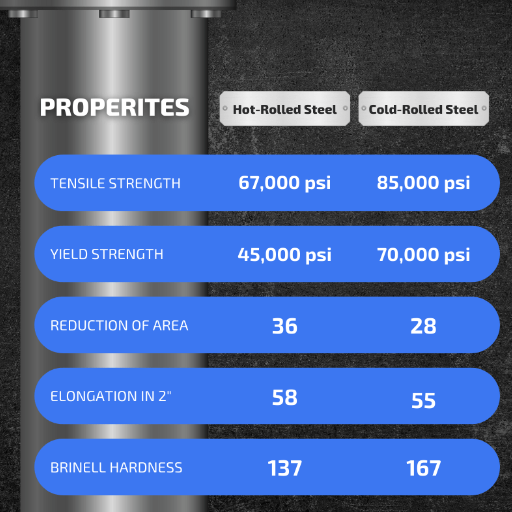
Based on the strain-hardening phenomenon caused by cold reduction on hot-rolled steel, cold-rolled steel tends to exhibit increased tensile strength, hardness, and yield strength. This means hot-rolled steel becomes easier to work with, as it is more pliable and malleable, making it suitable for less precision-focused shaping tasks. While cold-rolled steel provides superior surface quality and tighter tolerances for varying dimensions, hot-rolled best suits significant structural components due to its cost-effectiveness.
Comparing tensile strength between hot and cold rolled steel
In my opinion, cold-rolled steel fulfills that better than hot-rolled steel when looking for tensile strength in a piece of steel. Cold-rolled steel has gone through room-temperature rolling or strain hardening, which increases stability. This leads to a more substantial structure than hot-rolled steel, which is softer due to being processed at higher temperatures and lacking strain hardening. At the same time, hot-rolled steel becomes more valuable for flexible and shape-defining purposes, showcasing its high ductility.
Differences in malleability and formability
Due to their distinct processing methods, the two types of steel have different malleability and formability characteristics. Cold-rolled steel, or rolled steel, is processed at room temperature, thus resulting in lower malleability. However, this type of steel is ideal for applications with tight tolerances because of its superior surface finish and dimensional accuracy, such as automotive parts and home appliances. While this malleable region is more difficult to form without fracture, cold-rolled steel’s strength and attractive surface finesse make it ideal for specific applications.
Steel processed above 1700 degrees Fahrenheit or 927 degrees Celsius, known as hot-rolled steel, becomes more ductile and more straightforward to form complex shapes. This improved ductility allows for utilization in construction, structural beams, and other large-scale intense deformation projects. The downside to this increase in malleability is the rough and untamed surface, combined with low dimensional accuracy due to shrinkage and cooling during the process.
- Cold-rolled steel: Yield Strength: 36-51 ksi (250-355 MPa), approximate range. Surface finish: Ideal for thinner gauge applications, smooth with precise dimensions.
- Hot-rolled steel: Yield Strength: 29-38 ksi (200-260 MPa) approximate range. Surface finish: Better for thick gauge applications and larger shapes. Rough with low precision.
The selection of construction material is subject to preferences such as the task’s performance, appearance, or cost factors.
Impact of cold working on steel properties
Cold working improves steel properties remarkably by changing the steeleration’s microstructure. Steel is rolled, drawn, or pressed at room temperature, increasing strength and hardness due to work hardening. This phenomenon occurs due to increased dislocation density within the material, making it more resistant to deformation. Also, refining the grain structure by cold working improves surface finish, dimensional accuracy, and other parameters. However, this can also lower ductility and toughness, which depends entirely on the application.
- Strength Increase: Tensile strength can increase by approximately 50%- 100%, depending on the type of alloy and quantity of deformation applied.
- Yield Strength: As with most happenings, this is directly proportional to the applied deformation. Most parts have a 10-30% increase after cold working.
- Hardness: This, along with the other subheadings, is narrowly described in one word: substantial. Due to strain hardening, Vickers or Rockwell hardness numbers increase considerably in this precise case.
- Reduction in Ductility: Ductility percent elongation lowers, in most cases, beyond –20%, depending on the degree of work hardening applied.
Cold working works best where a high level of strength, a stark, clean surface, and a smooth finish are needed, but too much reliance may lead to drastic consequences such as brittleness and increased fragility.
What cost differences exist between hot-rolled and cold-rolled steel?

It is easy to see that the construction methods of hot-rolled vs. cold-rolled steel significantly impact the price difference. Since the production of hot rolled steel is quick, it uses less sophisticated machinery and tools, which makes it cheaper. However, additional steps such as annealing and rolling are done to cold-rolled steel, thus making it more expensive than hot-rolled steel. However, cold-rolled steel offers tighter tolerances and an unmatched smooth finish than hot-rolled steel, making it the better option for projects requiring precision and aesthetic appeal. Therefore, the final decision rests upon the project requirements, budget, and the type of high-precision steel.
Why cold rolled steel tends to be more expensive
Cold-rolled steel tends to be more expensive because of the additional processing and higher quality it delivers. The time spent on extra steps like annealing and precision rolling increases the price because of the need for specialized equipment. Moreover, the desirable aesthetics and precision required in some projects require cold-rolled steel because, unlike hot-rolled steel, cold-rolled offers tight tolerances and a smooth finish. Such advanced processing justifies the price added due to the premium quality mark.
Value considerations when choosing between steel types
When deciding between hot and cold rolled steel, several key value factors must be evaluated to find the best balance for cost, performance, and application-specific requirements.
- Cost-Efficiency: Projects not requiring cold-rolled steel’s superior surface finish and precision often benefit from using hot-rolled steel, as it is more economical. Cold-rolled processed steel provides refined mechanical properties and surface quality, which, while incurring higher production costs due to extra processing steps, justifies the cost for precision-oriented applications.
- Mechanical Properties:
-
-
- Hot Rolled Steel:
- Tensile Strength (approx.): 67,000 PSI
- Yield Strength (approx.): 45,000 PSI
- Ductility/Flexibility: High
- Cold Rolled Steel:
- Tensile Strength (approx.): 85,000 PSI
- Yield Strength (approx.): 70,000 PSI
- Ductility/Flexibility: Moderate to Low
- Hot Rolled Steel:
-
Cold rolling excels in structural parts, automotive components, and machinery due to its tighter dimensional tolerances and higher strength.
- Surface Finish and Aesthetics:
-
-
- Due to its scaly surface, hot-rolled steel is termed rough. It requires additional finishing processes for a smoother appearance.
- Cold-rolled steel benefits products requiring close dimensional accuracy and a smooth surface, such as appliances, furniture, and decorative components.
-
- Application-Specific Needs:
-
-
- Pick hot-rolled steel for tasks like making railroad tracks, construction beams, or automotive frames, where strength and cost are more important than precise measurements or the smoothness of the surface.
- Choose cold-rolled steel in applications such as precision metalworking, shafts, and other mechanical components where aesthetic appeal is essential alongside strength and precision.
-
Ultimately, choosing the type of steel to use depends on the specifics of your project, such as the budget, mechanical needs, and even the desired appearance. These factors guarantee that the application will give the best performance and value.
How do I select the correct type of steel for my project?
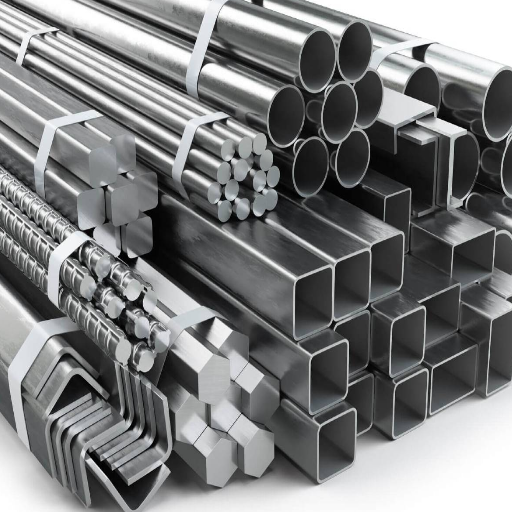
The first step in choosing the right type of steel for your project is contemplating your application’s demands. You also need to evaluate aspects like strength, durability, resistance to corrosion, and cost. If you want something that has precision and is visually appealing, cold-rolled steel is what you need, while hot-rolled steel is better for projects that require general-purpose functionality at a lower cost. Moreover, consider environmental factors; for high corrosion resistance, go for stainless steel. Analyzing your aesthetic and mechanical requirements will help you determine your project’s most fitting steel type.
When to use hot rolled steel for structural applications
Hot-rolled steel is best suited for structural projects and is helpful in applications focused on cost efficiency and durability. Projects like the construction of beams, rails, and heavy machinery components do not require a precise, smooth finish, making them ideal candidates for hot-rolled steel. It is also more affordable than cold rolled steel, giving it utility in budget-sensitive projects. Its strength and versatility enable reliance on large-scale structures. Additionally, hot-rolled steel becomes much more cost-efficient if surface defects do not impact functionality.
When cold-finished steel makes more sense
Cold-finished steel is sought when projects include exact dimensions, sharp surface finishing, and greater mechanical strength. Compared to hot-rolled steel, cold-finished steel undergoes extra processes like cold drawing and grinding, improving surface quality and tolerances. This adds value where aesthetics, precision, and strength are of the utmost importance, such as in shafts, gears, fasteners, and precision machinery parts.
Key Aspects of Cold Finished Steel:
- Dimensional Accuracy: Tolerances are significantly tighter, typically around ±0.001″ or better, depending on the grade and processing method.
- Surface Finish: Smoother finishes that average around 32 micro inches or better result from grinders or polishers.
- Mechanical Properties:
-
-
- Forms greater hardness because of strain hardening during cold processing.
- Improved tensile strength is commonly 10%-20% higher than the equivalent grade of hot-rolled steel.
-
- Straightness: Improving straightness tolerances, often tighter than 0.001″ per foot, reduces finishing work post-fabrication.
Cold-finished steel has set standards in precision engineering, making custom machinery and automotive manufacturing alongside guaranteed performance standards that focus on cosmetic components. The cost is justifiable because of the high-performance gained despite being pricier than hot-rolled steel.
Considering alloy options within hot and cold rolled varieties
Regarding alloy considerations regarding hot and cold rolled, I always consider the application requirements to select the most suitable material. For hot-rolled steel, alloys like A36, 1018, and 1045 are popular because they provide adequate strength and malleability for structural applications. From the cold rolled perspective, alloys such as 1018 and 1045 are also quite popular, but they provide better surface finish and tighter tolerances, which lend themselves to precision work.
These are some of the most important factors to remember:
- Hot Rolled Steel: Tensile strength (A36): approximately 58,000 – 80,000 PSI Yield strength (A36): approximately 36,000 PSI Typical applications: Structural components like rail tracks.
- Cold Finished Steel: Tensile strength (1018): approximately 64,000 – 74,000 PSI Yield strength for 1018: approximately 54,000 PSI Typical applications: Gears, shafts, custom-made machinery.
As may be clear, the decision to use one of these alloys rests on how the final product’s cost and specifications will affect the mechanical properties.
References
Frequently Asked Questions (FAQ)
Q: What is the main difference between hot-rolled steel and cold-rolled steel?
A: The main difference between hot-rolled and cold-rolled steel is their manufacturing processes. Hot-rolled steel is processed at temperatures above the recrystallization point (usually over 1,700°F), which makes it easier to shape. Cold-rolled steel is essentially hot-rolled steel that has undergone further processing at room temperature, resulting in better surface finish, dimensional accuracy, and increased strength. This difference in processing affects their appearance, mechanical properties, and suitable applications.
Q: How can you visually distinguish hot-rolled steel from cold-rolled steel?
A: Hot rolled steel typically has a rough, scaly surface with slightly rounded edges and corners due to the cooling process. It often has a blue-gray finish. Cold-rolled steel (or cold-finished steel) has a smoother, more polished appearance with precise dimensions and sharper corners. Cold-rolled steel generally has a matte, gray finish and appears more refined than its hot-rolled counterpart. These visual differences are a direct result of their respective manufacturing processes.
Q: What are the cost differences between hot and cold rolled steel?
A: Cold-rolled steel is typically more expensive than hot-rolled steel because it requires additional processing steps beyond the initial hot rolling. The extra labor, energy, and time needed for cold rolling and its improved properties and appearance contribute to its higher cost. Hot-rolled steel is more economical for projects where precise dimensions and surface finish are less critical. The price difference can range from 20% to 30%, depending on the specific grade, thickness, and market conditions.
Q: What applications are hot rolled steel commonly used for?
A: Hot rolled steel is often used in applications where precise dimensions are less critical and surface finish isn’t a primary concern. Typical applications include railroad tracks and railway parts, agricultural equipment, automotive frames and chassis components, construction materials (I-beams, angle bars), steel pipe and tubular products, heavy machinery components, and steel bars for concrete reinforcement. The material’s structural strength and cost-effectiveness make it ideal for these industrial and construction applications.
Q: What are cold rolled and drawn steel typically used for?
A: Cold-rolled steel is often used in applications requiring tighter tolerances, better surface finishes, and improved strength. Cold-drawn steel, a specific type of cold-finished steel, offers even greater precision. These materials are commonly used in: – Automotive body panels and components – Appliances and metal furniture – Precision metal parts and components – Shelving and metal cabinets – Metal office furniture – Electronics enclosures – Machined parts requiring tight tolerances – Metal strips, flat bars, and precision tubing. The superior finish and dimensional accuracy make cold-rolled products ideal for visible or precision applications.
Q: How does the production process differ between hot or cold rolled steel?
A: In hot rolled steel production, steel is heated above its recrystallization temperature (typically over 1,700°F) and passed through rollers while still hot. This makes the steel easily formable but results in less precise dimensions as the steel shrinks while cooling. Cold-rolled steel production takes hot-rolled steel and processes it further at room temperature through additional rollers to reduce thickness, improve surface finish, and increase strength. Cold drawing is another cold finishing process where steel is pulled through dies to achieve even tighter tolerances. These different production methods directly impact the materials’ properties and applications.
Q: What are the mechanical property differences between hot-rolled and cold-rolled steel?
A: Hot-rolled steel generally has less internal stress and is more ductile than cold-rolled steel, making it easier to form and weld. It has a lower yield and tensile strength compared to its cold-rolled counterpart. Cold-rolled steel has higher strength due to work hardening during the cold rolling process, which increases yield and tensile strength by 15-20%. Cold-rolled steel is typically harder but less ductile than hot-rolled steel. These mechanical differences make each type suitable for applications based on the required strength, formability, and stress performance.
Q: Can hot-rolled steel be converted to cold-rolled steel?
A: Cold-rolled steel is essentially hot-rolled steel that has undergone additional processing. The manufacturing sequence begins with hot rolling, and then the material may be pickled (acid cleaned) to remove scale, annealed to improve workability, and finally cold rolled to achieve the desired dimensions and properties. The starting material for cold rolling is always hot-rolled steel, as the initial hot rolling process is necessary to form the basic steel shape before refinement through cold working. This sequential relationship is fundamental to steel production.
Q: How do welding and fabrication differ between hot or cold rolled steel?
A: Hot-rolled steel is generally easier to weld due to its lower carbon content and less internal stress. It’s more forgiving during fabrication and responds well to bending and forming operations. Cold-rolled steel can be more challenging to weld because of its higher carbon content and internal stresses from the cold working process. Welding cold rolled steel often requires more careful heat control to prevent warping or distortion. Additionally, cold-rolled steel may lose some of its enhanced properties in the heat-affected zone of welds. When fabricating either material, the specific properties of each should be considered to determine appropriate welding parameters and techniques.


