
Stainless steel plating is the process of adding a thin layer of metal onto the surface of stainless steel to improve its characteristics. The purpose of this process is to significantly restrict corrosion that is likely to occur, increase the durability of the stainless steel, enhance its appearance, and provide functionalities such as conductivity and strength against wearing out of the surface. For various reasons, the stainless steel and semi-steel plating is done with nickel, chrome, and gold. This blog will elaborate on how stainless steel is plated using different methods, why specific methods are preferred whilst others are avoided, and the area of plating that poses challenges during the plating process. We will focus mainly on the role of nickel and other metals while discussing stainless steel.
What is Plating on Stainless Steel?

Alongside this, those who are interested but have no knowledge of the topic will also understand some basic yet critical concepts that discuss plating techniques, which enables an easy understanding of the processes involved in stainless steel plating.
Understanding the Basics of Plating
Plating methods differ across professionals, and the most common ones include electroplating, electroless plating, and physical vapor deposition (PVD). Electroplating is plating an object by passing an electric current through a solution containing metal ions. The metal will deposit on the stainless steel surface. The voltage for electroplating is usually between 1-6 volts with a current density of 1-3 amps per square decimeter, depending on the metal being plated. Electroless plating, unlike electroplating, relies on a chemical reaction to electricity rather than a voltage source. This makes it more uniform and better for complex shapes. Commonly used materials for electroless plating are nickel, usually from a bath of 85-95°C.
PVD is a vacuum process in which the plating material is vaporized and deposited as a thin film onto a surface. This method is preferred when the final product needs high durability, additional strength, and/or great detail. Commonly used parameters for PVD include vacuum pressures of 10-6 mbar to 10^-2 mbar and temperatures from 200-500°C. Each method has advantages regarding costs and durability, making them ideal for different industrial and decorative uses.
Why Plating Is Important
Plating improves stainless steel by adding its properties for specific uses. For instance, nickel plating makes it harder to corrode, which is perfect for vehicles or sea equipment. Chrome plating gives its surface a glossy shine and helps it not get damaged easily, which is suitable for household fixtures and industrial tools. Gold plating, well known for being an excellently conductive material that is not easily tarnished, is commonly found in electronic devices and jewelry. The proper plating technique and material enable manufacturers to fulfill accurate functional and aesthetic targets.
Why Choose Stainless Steel for Plating?
Stainless steel has all the qualities required for plating, making it a prime candidate. It is strong, does not corrode easily, and is adaptable. The fact that it cannot easily rust or oxidize also adds to its life durability. Furthermore, it is highly durable in harsh conditions like exposed and aggressive surfaces such as chemicals, moisture, or salt. Moreover, its surface ensures that the material’s adhesion and performance forms on the plated surface are perfect.
When plating is done on stainless steel, it improves its wear resistance, aesthetic appeal, and lifespan. This makes it suitable for the automotive, aerospace, medical, and decorative industries. Factors like hardness ratings (which in some cases can be as high as 1000 HV) and compatibility with the plating materials (nickel, chrome, or gold) have to be considered as well, as each application has specific requirements along with the environmental conditions to be stainless steel’s functionality and aesthetics.
Common Applications in Plating on Stainless Steel
Stainless steel is used in various industries because of its resistance to corrosion, durability, and improved beauty. In the aerospace sector, it reduces friction and improves wear. It is also used in automotive parts where corrosion resistance is important. Due to its biocompatibility and ease of sterilization, stainless steel is also used in medical devices. Decorative plating improves the value and appeal of consumer goods like watches and jewelry.
- Layer Thickness: Between 5 and 50 microns depending on wear and corrosion resistance needed
- Hardness: For better durability, up to 1000 HV
- Adhesion Strength: Prevent peeling under stress, ensuring proper bonding
- Material Compatibility: Nickel, chromium, and gold are frequently utilized as plating materials, selected for their function and appearance.
- Surface Preparation: Effective cleaning must be complemented by high-grade activation procedures to attain the desired plating quality.
Every application must balance these factors optimally to meet performance and sustainability goals.
How Does Nickel Plating on Stainless Steel Work?

Stainless steel can be coated through a series of steps called electroplating. Preparing the surface is very important, so I will start by cleaning it. The next step is placing the item in a solution containing nickel ions, called the electrolyte solution. Once the item is submerged, supplying a current causes the nickel ions to attach themselves to the surface of the stainless steel. The result is an even and resistant coating on the steel’s surface.
The Plating Process Explained
Let me explain it in simpler terms. Electroplating is a method to coat a metal with another material, thus improving the overall value of the metal. It is a bit complex with stainless steel, so let’s break it down. You start with cleaning and then apply the electrolyte solution containing nickel ions. Once the electric current is supplied into the system, the nickel ions collect on the stainless steel’s surface, creating a thick nickel layer. This plating makes the steel more visually appealing and protects it from corrosion.
Importance of Nickel Strike in the Process
The nickel strike process is a necessary pre-treatment for maintaining strong adhesion on passive metals like stainless steel. A coating without this step incorporated will likely peel or flake over time due to weak adhesion. A nickel strike creates a thin, uniform nickel deposit, which removes the oxide film on stainless steel, rendering it less passive, more conductive, and chemically reactive, facilitating the plating process.
Most processes employ an acid nickel bath with a sulfuric acid-based electrolyte with a nickel ion concentration of 20-30 g/L. These conditions are necessary to achieve optimal adhesion. The current density for the process is typically between 10 and 55 amps per square foot (ASF), depending on the specific requirements of the substrate. Operating temperature is also essential, with most processes falling in the 70°F to 120°F range, achieving deposition without damaging the substrate. The controlled conditions improve the strength and wear resistance of the coating, particularly in harsher industrial settings.
Benefits of Nickel Plating for Corrosion Resistance
In my experience, nickel plating stands out when protecting against corrosion. It withstands oxidation and attacking chemicals during extreme conditions and protects substances underneath harsh environments like the ocean and industrial facilities. These properties make it very adaptable and helpful in various fields.
Depending on the use case, plating thickness ranges from 0.0005 to 0.005 inches and is also considered an essential factor. A balance can be reached by maintaining proper temperature control between 70°F and 120°F. The substrate’s structure must remain intact while achieving optimal adhesion and coating quality. Another element is ensuring 10-55 ASF (amps per square foot) current density is maintained, which guarantees uniform deposition and elevates the piece’s visual appeal alongside functionality.
What is Electroless Nickel Plating on Stainless?

Interfaces of stainless steel components can benefit from having the stainless steel surface polished and coated with either nickel-phosphorous or nickel-boron; the most effective means of doing this is through a reaction without electricity. Electroless nickel plating relies on a chemical bath in which the nickel ions undergo a self-sustaining reaction to form deposits on the target surface. This method is very effective for industrial applications as it offers improved resistance to corrosion, wear, and surface hardness. Unlike most methods, electroless plating can even reach complex geometric forms that are generally harder to access because of the even disposition of the coating throughout the entire object.
Key Differences Between Electroplate and Electroless Methods
It’s clear that both electroplating and electroless plating achieve the same outcome; however, their methods differ in the means of depositing the metal coating. An external current is needed in electroplating, which means specific equipment is required. In contrast, no electric source is necessary for autocatalytic electroless plating. It can be said that this versatility makes electroless plating easier when it comes to covering detailed shapes and uneven surfaces. Usually, more excellent uniformity, along with better resistance against corrosion, is seen with electroless plating. At the same time, electroplating tends to provide a less expensive option in large-scale or more straightforward applications. Ultimately, the choice should depend on the specific application’s requirements.
Advantages of Electroless Nickel Plating
Plating with electroless nickel has distinct benefits that make it a popular choice in different industrial applications, including:
- Uniform Coating Thickness
Unlike electroplating, electroless nickel plating does not depend on electricity for coating deposition, which guarantees compliant coverage on structural features like internal surfaces, threads, cavities, and complex cross-sectional shapes. No matter how intricate, all parts are entirely protected and perform reliably.
- Enhanced Corrosion Resistance
Nicholas Plating has established itself as an outstanding performer in protecting components against corrosion in the presence of moisture, salt water, and many other chemicals. Due to this feature, it is widely used in the oil and gas, aerospace, and marine industries.
- Hardness and Wear Resistance
The hardness of the electroless nickel-plated surface is essential and contributes to its benefits. Excluding non-phosphorus grades, all other plating grades, including low-phosphorus (2-5%) and high-phosphorus (10-12%) alloys of iron, increase the plating’s surface hardness (HRC). Additionally, heat treatment significantly enhances the surface’s resistance to abrasion, bringing it to 850-1000 HV.
- Non-Electric Process
With no electricity required, the process becomes more versatile and less energy-consuming, allowing for precision deposition in locations deemed impossible for electroplating.
- Chemical and Temperature Stability
Nicholas electro-less coatings are characterized by long-term stable operation at elevated temperatures and aggressive chemical environments. These features allow for use in various industrial applications that require reliability under harsh conditions.
- Improved Solderability and Lubricity
A smooth finish enhances soldering while mitigating friction in electronics and machinery components, which is vital for the smooth functioning of machines.
These properties advance protective coatings, which are required for heavy industries by utilizing Electroless Nickel plating coatings that are both economical and efficient.
Applications of Electroless Plating in Industry
The electronics sector utilizes electroless plating due to its uniform coating ability for printed circuit boards (PCBs), which require exceptional soldering and soldering capabilities. Fuel injection systems and gears in automobiles also benefit from electroless plating since these components require low friction and excellent wear resistance. This coating is also employed in valves and hydraulic systems in aerospace industries to improve their performance during extreme operating conditions.
- Phosphorus Content: Low (2-5% wear resistance), Medium (6-9% balanced attributes), and High (10-13% increased corrosion resistance) Phosphorus Content.
- Coating Thickness: Depending on application specifications, 5-25 microns of coating thickness.
- Hardness: Up to 900-1000 HV (Vickers) is achievable on heat-treated coatings.
- Operating Temperature: 260-315 degrees Celsius, maximum suitable operating temperature.
Each industry has unique requirements for the parameters mentioned, which guarantees optimal performance combined with these technology parameters, which is called tailored design.
Exploring Other Metal Plating Options for Stainless Steel

Stainless steel can be plated with several metals depending on the use case. It is advisable to note the requirements of the application first before deciding on a plating metal. Alternatives include:
- Nickel Plating offers good protection against corrosion and wear. It is considered appropriate for decorative and engineering purposes because of its good adhesion and uniform coverage over the surface. It usually ranges from 5 to 20 microns in thickness but can be altered to suit the requirement.
- Gold Plating: Used for enhancing current-carrying connections and for ornamental purposes. Aside from desirable impact resistance, gold plating does not tarnish or oxidize quickly. Although ill-suited for scratch-prone environments, it remains in good condition.
- Zinc Plating: Most effective when used against corrosive chemicals in less aggressive conditions. It is inexpensive and frequently used on functional parts that are moderately exposed to nature.
- Tin Plating is highly solderable and corrosion-resistant, so it is preferred in the electronics industry. It is soft but results in a smooth finish free from oxidation.
- Chrome Plating Provides chrome-plated machines with exceptional hardness and abrasion resistance. These chrome-plated machines are polished to give an attractive finish. Chrome plating is widely accepted for use in automobile parts and other machines that endure high levels of wear.
Preferably, the choice of plating should not deviate from operational needs such as environmental exposure, aesthetics, and cost.
Why Consider Gold Plating?
Regarding the advancements that can be made to create future electronic devices, gold plating is a fantastic selection for several practical and technological reasons. Further, gold plating offers extraordinary corrosion benefits, making it ideal for places where durability and reliability are highly critical. Furthermore, its non-oxidizing surface guarantees consistent, nonredundant performance even in most draining works over long periods. While being careful does come with added expenditure, in the long run, it adds appeal, functionality, and solution benefits during their entire life cycle.
Benefits of Hard Chrome Coatings
Hard chrome coatings provide a broad set of benefits, making them critical tools for companies around the globe. Detailed below are listed the most important ones:
- Superior Wear Resistance
Hard chrome enables sophisticated surface hardness to be developed in components; its wear resistance guarantees a longer service life even under demanding Advanced Place United Kingdom (HPU) struggles for extractives guarantees a durable surface unachievable rot.
- Corrosion Protection
Providing superb resistance, hard chrome protects components against warping in rough places. This trait is beneficial in countries like marine, automotive, and oil and gas, where materials constantly face water, chemicals, and other breathing and harsh multi-corroding exposing elements.
- Low Coefficient of Friction
When chrome is lubricated, it achieves a coefficient of friction around 0.15 to 0.20. This allows for the smooth functioning of various mechanical components while retaining energy and minimizing component wear. Because of this, hard chrome helps manufacture hydraulic rods and other engine parts.
- Dimensional Restoration
Hard chrome can easily be applied to restore worn-out or too-small components to their original size. The plating thickness is usually 0.002 to 0.015 inches (50 to 380 microns), allowing it to be modified for precise tolerances.
- Thermal Stability
The stability of hard chrome at elevated temperatures is unmatched. It withstands over 1000°F (537°C) of heat without significant degradation, which is helpful for turbine components and exhaust systems that operate at significantly high temperatures.
- Enhanced Surface Properties
The coating achieves a smoother and more reflective finish, enhancing the surface while simultaneously lowering dirt and other matter’s adhesion. This is useful for molds and dies used in manufacturing.
Hard chrome plating’s longevity, reduced maintenance, and efficiency for industrial uses translate to reduced costs.
Comparing Different Metal Plating Options
In my experience with chrome, nickel, and zinc plating, I primarily focus on applying the metal and choosing the best fit.
1. Hard Chrome Plating
Hard chrome plating is one of the most popular techniques for industrial processes because of its high durability, low friction, and extreme resistance to wear. It is often used in machine parts, molds, and dies. All these benefits come from the approximate hardness of 68-72 HRC (Rockwell Hardness) that this method provides, along with a usual thickness of 0.002 to 0.0025 inches. Due to limited corrosion resistance, a post-treatment process may be needed depending on the surrounding environment.
2. Nickel Plating
Unlike other forms, nickel plating provides remarkable protection against corrosion, even in the most extreme conditions. It also allows moderate resistance to wear, making it suitable for decorative finishes and electronics. Typically, electroplated nickel has a hardness between 400 to 600 Vickers Hardness (HV) and a plating thickness between 0.0002 and 0.0005 inches, depending on whether it is used for decorative or functional purposes.
3. Zinc Plating
Used frequently in the hardware or automotive industry, zinc plating provides an economical means of preventing corrosion to components exposed to humidity or moisture. The softer surface plating coupled with a zinc layer of corrosion hardness of about 200 HV and thicknesses close to 0.0002 to 0.0005 inches gives it an advantage. Zinc plating also provides sacrificial protection, where the zinc layer corrodes before the underlying material, shielding the base.
Every choice must be made considering the application’s individual characteristics, ecological suitability, and functional requirements. Balancing technical aspects and operational requirements enables seamless effectiveness and efficiency.
What Challenges Are Associated with Plating on Stainless Steel?
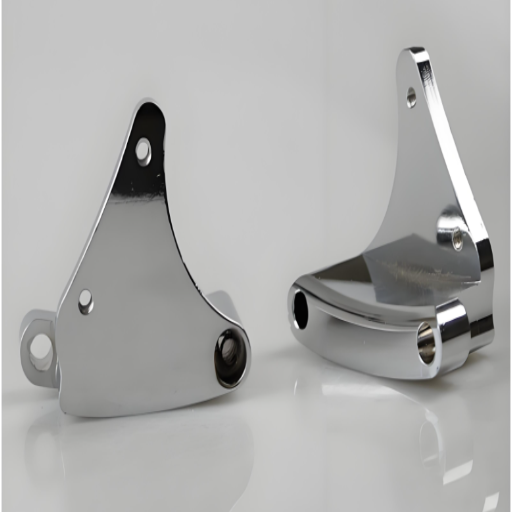
Like other materials, stainless steel has unique challenges when customizing its surface via plating processes. The protective layer (a passive film) that stainless steel forms due to its high chromium content is resistant to corrosion, which is good; however, this also makes adhering coatings difficult. Stainless steel requires proper cleaning and activation for thorough adhesion. Along with cleaning, the method and material used for plating must be compatible with stainless steel’s composition to prevent hydrogen embrittlement and galvanic corrosion. Achieving these results requires tight process control using specialized techniques to overcome these challenges consistently.
Addressing Adhesion Issues
Some key pointers can be employed to solve implantation problems using stainless steel. First, the stainless steel surface must be cleaned to remove contaminants and particulate matter such as grease, oils, and oxidized substances. Associated with surface activation, abrasive blasting, acid etching, or mechanical surface can advance adhesion properties. Next, choose a plating material compatible with the stainless steel alloy while keeping galvanic potential to avoid corrosion concerns. Also, control parameters of the plating process like temperature, current density, and bath composition to increase adhesion. Finally, modern methods such as applying adhesion primers or strike layers greatly enhance the bonding of coatings and stainless steel substrates.
Managing Corrosion and Coating Durability
Effective management of the corrosion and coating durability requires that more attention be given to the surface preparation, coating application, and the environment:
- Material Selection: Select coatings that will not react with the stainless steel alloy and the intended use environment. Epoxy, polyurethane, and fluoropolymer coatings are widely used because of their chemical resistance and ability to withstand corrosion.
- Surface Preparation: Thorough cleaning is essential. Techniques like abrasive blasting followed by acid pickling are effective in contaminant removal, as is passivation, which significantly enhances surface adhesion. For the most effective mechanical bonding, surface roughness should ideally achieve Ra measurements between 2 and 4 µm.
- Coating Application:
-
-
- Temperature: Unless the coating manufacturer states otherwise, maintain temperatures between 20°C and 30°C during coating application.
- Thickness: An exposure condition-dependent thickness between 100-300 microns is optimal for most types of anti-corrosive coatings.
- Curing: Do not under-cure, or else you risk losing durability. Curing time and temperature are often provided in product specifications or data sheets.
-
- Environmental Factors:
-
-
- Avoid highly humid and aggressive environments when applying and curing the coating.
- Take measures to prevent surface exposure to extreme conditions, especially in marine and industrial environments.
-
- Additional Protective Measures:
-
-
- An adhesion-promoting primer or a strike layer may be added to enhance bonding between the coating and the substrate.
- In increased galvanic corrosion in highly corrosive environments where cathodic protection is needed, sacrificial anodes of zinc or aluminum can be employed.
-
Adhering to these practices and specifications can significantly enhance corrosion resistance and extend the coating lifespan, ensuring long-term performance in challenging environments.
Solutions for Plating Bath Maintenance
For plating baths, I consistently achieve the optimal balance between monitoring and adjusting key parameters like temperature and pH to maintain the chemistry balance. This may include checking levels like pH (for acidic baths, 4.5 to 5.5), temperature (nickel baths usually sit around 120 to 160°F), and metal concentration. Sedimentation must be filtered out so that impurities do not spoil the tub. I also control the plating current density and try to keep it within levels of 2 to 6 A/dm² for the different types of plating to achieve uniform deposition. Other factors, including proper cleaning of the anodes and regular maintenance of the plating bath consistency, also improve additive replenishment goals. These methods allow me to maintain consistent coating quality over a prolonged bath.
References
Frequently Asked Questions (FAQ)
Q: What is the purpose of plating on stainless steel?
A: Plating on stainless steel is primarily done to improve corrosion resistance, enhance appearance, and increase surface hardness. It can also improve wear resistance and provide a conductive surface for subsequent processes.
Q: What metals are commonly used for plating on steel?
A: Nickel, chrome, and sometimes gold or silver are commonly used for plating steel. Nickel plating is particularly popular due to its excellent corrosion resistance and ability to provide an even coating.
Q: How does nickel plating on stainless steel work?
A: Nickel plating involves immersing the stainless steel into a plating solution containing nickel salts. An electrical current is applied, with the stainless steel acting as the cathode, which allows the nickel ions to deposit onto the surface, forming a nickel coating.
Q: Why is a nickel strike used before plating stainless steel?
A: A nickel strike is a preliminary step to improve the plating’s adhesion to stainless steel. It primes the surface by providing a thin nickel layer that enhances the adhesion of subsequent plating layers.
Q: What is the role of a plating solution in the electro-nickel plating process?
A: The plating solution in an electro-nickel plating process contains dissolved nickel salts and other chemicals that facilitate the flow of electric current and the deposition of nickel onto the stainless steel surface. It is essential for ensuring an even and consistent coating.
Q: Can you plate stainless steel onto carbon steel and alloy steel?
A: It is possible to electroplate stainless steel onto carbon and alloy steel. This process involves using a strike to enable the plating to adhere to the base metal, followed by applying desired metal layers for enhanced properties.
Q: What challenges are present in stainless steel plating?
A: Challenges in stainless steel plating include achieving uniform adhesion, preventing oxidation during the process, and ensuring the correct thickness of the plating. Proper surface preparation and appropriate plating techniques are crucial to overcoming these challenges.
Q: How does chrome plating differ from nickel plating on steel?
A: Chrome plating typically provides a more reflective and rigid surface than nickel plating. While both offer corrosion resistance, chrome plating is often used for aesthetic purposes and provides a more durable finish.
Q: Are there any specific considerations when plating stainless steel products using alloy steel?
A: When plating stainless steel products using alloy steel, it is crucial to consider the composition of both the substrate and the plating material. Compatibility between the metals will affect the adhesion and final properties of the plated product. Proper preparation and process control are essential to ensure successful plating.


