
Galvanized steel is recognized for its durability and resistance to corrosion, making it ideal in construction, manufacturing, and numerous other industries. However, many wonder: does galvanized steel rust over time? To answer this question, this blog post will look into the science of galvanization, its zinc protective coating, and the elements that determine its lifespan. We will also uncover the conditions that allow galvanized steel to corrode while providing tips on maintaining the steel’s integrity. By the end of this article, you will have an all-encompassing and clear understanding of galvanized steel, its strengths, and how to make it last longer in various applications.
What is Galvanized Steel, and How Does it Work?

Galvanized steel is coated with a protective zinc aluminum hot dip, preventing corroding and rusting. The protective coating of zinc is usually done by hot dip galvanization, submerging steel into molten zinc. The zinc coating protects the steel from moisture and oxygen, which causes corrosion. Furthermore, zinc will corrode instead of the steel underneath in case of scratches on the coating. Because of these reasons, galvanized steel is a durable and cost-effective material for construction, automotive, and outdoor structures.
Understanding the Galvanization Process
The galvanization procedure involves coating steel or iron with zinc to protect it from rusting and corroding elements. In my research, I encountered a process called surface preparation that consists of cleaning the material through degreasing and pickling to remove dirt, grease, and mill scale. This helps ensure the zinc will stick. Moreover, the cleaned steel is dipped into molten zinc at approximately 840 ºF (449 ºC), where a bond develops between the zinc and iron – known as metallurgical bonding. This layer provides resistance against moisture and oxygen, but other than that, it protects sacrificially – meaning the zinc will corrode first if the coating is scratched. Because of this, galvanization provides an efficient and economical advantage for areas that require durability and are prone to harsh conditions. This technique is widely embraced in construction, infrastructure, and automotive industries because of its simplicity and effectiveness.
The Role of Zinc Coating in Protection
Zinc coatings, primarily applied through galvanization, protect metals from corrosion. To protect the metal, they must resist oxidizing environmental elements like moisture and oxygen, all of which would corrode exposed metals. Moreover, zinc provides cathodic protection, which means that when the coating is scratched or damaged, the outer layer will corrode instead.
The thickness of the zinc coating affects its durability and performance. For instance, in hot-dip galvanizing, the coating thickness is between 50 and 150 microns, depending on the steel’s chemistry and immersion time. It has been shown that this may provide a corrosion-resistant service life of 20–50 years or more in typical atmospheric conditions. A thinner coating process such as Electro-galvanizing usually leaves a layer of 6 to 25 microns, which is ideal for applications where minimal weight or dimensions are required but some corrosion resistance is still needed.
Factors of Zinc coatings differ with their application. The more important are:
- Coating Thickness: Varies from ~6 to 150 microns based on the galvanization method.
- Adhesion Strength: Varies from ~6 to 150 microns based on the galvanization method.
- Salt Spray Resistance: Often exceeds 500 hours for specific zinc finishes tested per ASTM B117.
Zinc coatings are utilized in many areas to extend the service life of steel structures, pipes, car parts, and even home devices. By optimizing performance vs. cost, zinc remains one of the primary materials used in anti-corrosion techniques around the globe.
Differences Between Mild Steel and Galvanized Steel
The melt shop prepares the raw materials for smelting in the steel coaster. During the comparative study of mild and galvanized steel, their treatments and corrosion resistance become differentiating factors. Mild Steel, a type of low-carbon steel, is quite versatile but rusts readily when exposed to moisture or air. On the other hand, Galvanized steel is mild steel coated with a layer of zinc, which acts as a protective shield, significantly improving its corrosion resistance.
- Corrosion Resistance:
-
-
- Mild Steel: Easily corroded and needs extra treatment like painting, oiling, or galvanizing to increase lifespan.
- Galvanized Steel: Offers high resistance to corrosion thanks to the zinc coating, meeting A123 or A153 standards.
-
- Strength and Durability:
-
-
- Mild Steel: Has a standard tensile strength of roughly 400 – 550 MPa.
- Galvanized Steel has the same tensile strength but is more durable under environmental stress.
-
- Cost:
-
-
- Mild Steel: It has a cheaper price tag since it is untreated.
- Galvanized Steel is more expensive because of the galvanization; however, it is more cost-effective in the long run when used in wet or outdoor environments.
-
- Applications:
-
-
- Mild Steel: Ideal for indoor structures, general fabrication, and automotive parts.
- Galvanized Steel: More suitable for outdoor construction, pipelines, or any structure that needs moisture and weather resistance.
-
By choosing between these two kinds of steel based on environmental factors and spending, you guarantee the material most suited for your project in terms of efficiency and expense.
Why Does Galvanized Steel Rust?

Steel that has been galvanized can still rust when the protective zinc coating is damaged or worn away. This layer protects the steel from oxygen and moisture, but harsh conditions like constant moisture, saltwater, or acidic pollutants can corrode the layer. As long as the zinc layer is intact, there’s no issue, but once it’s depleted, like in the case of now-exposed steel, it becomes vulnerable to rust. Regular inspection and cleaning drastically reduce the chances of rust developing in galvanized steel.
The Corrosion Process Explained
Corrosion typically refers to the process of a refined metal returning to a more stable state, resulting in something like an oxide, hydroxide, or sulfide. It occurs naturally and begins when a metal comes into contact with an electrolyte, which can be water, moisture, or atmosphere. Take steel, for example: When iron comes into contact with water and oxygen, it oxidizes and forms iron oxide (Fe₂O₃·xH₂O).
The type of environment, metals used, and protective coatings, if any, are just some factors influencing the corrosion process. In the case of galvanized steel, the zinc coating acts as a protective barrier, meaning it will corrode first to protect the steel underneath. Protective parameters like pH levels, environmental humidity, and salinity influence the corrosion rate. Important points include:
- pH Level: Corrosion is more likely to occur in an acidic environment below 6.
- Humidity: Environments with relative humidity over 60% increase the risk of corrosion significantly.
- Chloride Concentration: Coastal regions or those with saltwater are likely to have chloride concentrations over 2500ppm, significantly increasing the rate at which the zinc layer degrades.
These factors, in addition to properly maintaining the protective coating through periodic inspections, renewals, and application of anti-corrosion materials, can significantly prolong the life of metallic structures. Durable and safe infrastructure requires well-managed environmental conditions, constant monitoring for corrosion, and efficient control.
Factors Influencing the Rate of Corrosion
The rate of corrosion is impacted by a combination of environmental, material, and operational factors:
- Environmental Conditions: The passages of time and processes will bleach components exposed to Moisture, Temperature, and Corrosive agents. Some examples are listed below:
-
-
- Relative Humidity: Increase in corrosion rates for relative humidity greater than 60.
- Temperature: Higher chemical reactions can enhance corrosion reactions. Therefore, higher temperatures speed up corrosion.
- Pollutants: The presence of SO2 or Cl—ions in industrial areas like coastal regions increases the risk of corrosion.
-
- Material Properties:
-
-
- Alloy Composition: Materials such as stainless steel (10.5% plus Cr content) resist further corrosion because they have a protective oxide layer.
- Surface Finish: Smooth or coated surfaces provide better resistance to corrosion than unprotected and rough surfaces.
- Residual Stresses: Metals with residual stresses are more susceptible to stress corrosion cracking.
-
- Electrochemical Factors:
-
-
- pH Levels: Nonneutral (pH < 4 or pH>9) solutions tend to corrode materials very rapidly.
- Electrolyte Conductivity: The presence of saltwater enhances the ability to conduct electricity, which in turn enhances electrolytic reactions and corrosion.
- Galvanic Coupling: The less noble metal in contact with dissimilar metals becomes corroded at a higher rate when immersed with an electrolyte.
-
- Operational Factors:
-
-
- Operating Temperature: Thermal stress and higher deterioration are suffered by systems with higher and volatile temperatures.
- Mechanical Damage: Scratches, abrasions, and other physical damage may jeopardize protective coatings or passive layers safeguarding the base metal.
- Exposure Time: Damage will accumulate over time with prolonged exposure to corrosive environments.
-
Corrosion impacts can be mitigated through various methods, such as protective coatings or cathodic protection. Understanding targeted mitigation strategies helps deal with the environmental factors intended to cause damage.
Impact of Environmental Conditions on Corrosion
As explained in the previous paragraphs, these methods can be complemented with a controlled environment to deal with corrosion. Corrosion is greatly influenced by external conditions such as temperature, humidity, and the presence of pollutants (like chlorides and sulfur compounds). For instance, weathering heat tends to accelerate the rate of chemical reactions, increasing the corrosion rate. Moreover, erosion in coastal regions is a concern due to the high concentration of chlorides, leading to severe pitting and crevice corrosion.
Key Aspects to Consider:
- Temperature Range: The corrosion rate is expected to increase after 40°C (104°F).
- Relative Humidity: Corrosion tends to increase from an expected 60% to 70% as electrolytes boost cylinder rusting.
- Chloride Concentration: Environments with a chloride concentration above five parts per million (ppm) tend to be highly corrosive to materials such as stainless steel.
- Pollutant Levels (e.g., sulfur dioxide): Any level greater than 0.1 PPM can accelerate the corrosion rate in metropolitan or industrial regions.
Such parameters can significantly reduce and mitigate corrosion if well-controlled, monitored, and managed.
How Does the Zinc Layer Protect Against Corrosion?
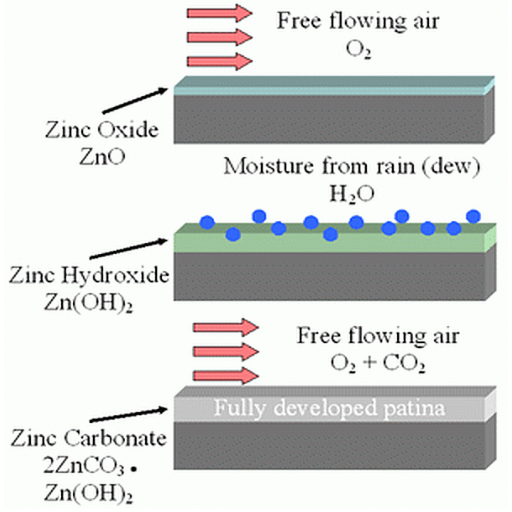
A zinc coating protects the steel from oxidizing using the galvanic protection method. Since zinc is more reactive than steel, it corrodes first when in contact with water or oxygen. This sacrificial corrosion prevents the base steel from corroding further. Furthermore, zinc physically binds with the steel, preventing water, oxygen, and other pollutants from reaching it and further enhancing corrosion resistance. This combined method increases the life of the coated material.
The Concept of Sacrificial Anode
A sacrificial anode prevents the base metal from corroding using galvanic corrosion. A typical example of this is an anode made of zinc or magnesium, which is far more reactive than the metal it is meant to protect, so it bears the brunt of the corrosion. Galvanic corrosion occurs because the sacrificial anode is composed of less noble metal, which oxidizes quicker when it comes in contact with electrolyte(s), such as water. As a result, the base structure remains corrosion-free and drastically increases its lifetime in hostile settings.
Effectiveness of the Protective Zinc Coating
The protective ability of zinc coatings relies heavily on sacrificial protection through galvanic corrosion. Protective zinc coatings, known as zinc coatings, are applied through galvanization methods such as hot-dip galvanizing or electroplating. These coatings form a strong oxide barrier that protects the underlying metal from environmental exposure. Zinc will form a protective layer of zinc oxide and zinc carbonate that prevents further corrosion while exposure to air and moisture exists.
Other critical factors include coating surface coverage and environmental conditions:
- Coating Thickness: For hot dip galvanizing, the optimal thickness for protection is between fifty and one hundred fifty microns. Each environment and application differs, so some coatings above or below this range last longer. Thicker coatings generally provide longer protection durations.
- Adhesion Quality: Surface edges must also be tightly bound to attain complete protection. Partial coverage and non-uniform application leave base metals exposed to corrosion.
- Environmental Conditions: Zinc coatings are widely known for their performance in atmospheric conditions with a pH of five to twelve. However, additional protective measures must be taken in highly acidic or alkaline environments.
- Longevity: Depending on thickness and environment, zinc coatings have a twenty- to fifty-year estimate before reapplication is needed.
In general, applying protective coating zinc galvanization is simple and protects construction, automotive, and marine metals cost-effectively, optimizing their lifespan. Regular check-ups, along with adequate application, help maintain its full efficacy.
Understanding Galvanic Corrosion
Galvanic corrosion is a process that occurs when two distinct metals are in electrical contact and located in a conductive medium, like an electrolyte. This happens due to the difference in potential sitting among the metals. It causes the anodic metal (the nobile less metal) to corrode and protect the more cathodic metal (the more noble). Different variables dictate this type of corrosion, such as potential difference of metals, surface area ratio, conductivity of the environment, etc.
- Galvanic Series:
-
-
- To reduce risk, use metals close to each other in the galvanic series, like stainless steel and titanium, because they are less reactive, unlike aluminum and zinc, which are more anodic.
- Potential range in seawater example:
- Stainless Steel 316 (noble) ≈ -0.05 V
- Zinc (active) ≈ -1.10 V
-
- Surface Area Ratio:
-
-
- Decreasing the area of the anodic metal about the cathodic metal increases the likelihood of corrosion.
- To avoid increased corrosion, maintain an equal or greater than 1:1 ratio while preferring the cathode area when feasible.
-
- Electrolyte Environment:
-
-
- Electrolyte conductivity, such as salt water vs. fresh water, dramatically affects the corrosion rate. Increased salinity increases conductivity and enhances the reaction even further.
-
- Isolation or Protective Coatings:
-
-
- Applying non-conductive coatings or insulating materials between the metals prevents direct electric contact, guarding against corrosion.
- Typical coating materials include epoxy resins or zinc-rich primers.
-
Avoiding galvanic corrosion in structures such as bridges, vessels, and pipelines requires comprehensive material choice, environmental considerations, planned strategic designs, and ongoing structural inspections to manage corrosion effectively.
What are the Signs of Corrosion in Galvanized Steel?

Some signs of corrosion ideally include visible rust staining, a dull or powdery surface, and the formation of zinc hydroxide white rust. Generally, galvanized steel suffers from corrosion in the long run. Patches of zinc coatings that have been scratched or worn away will show exposed steel, leading to surface or localized corrosion (LC). Flaking, blistering, and discoloration are other numerous signs of coating degradation. Periodical inspection enables maintenance to work at the right time. Therefore, these signs ought to be monitored optimally.
Identifying Oxidation and Rust
Based on the context provided, this is how I would identify rust and oxidation. Oxidation combines a material – usually a metal – with oxygen or other active nonmetals, generally producing oxide films. It can also mean merging primary metals with oxygen to create a thin oxide coating over the metal. For this explanation, oxidation will refer specifically to iron or steel. These metals’ reaction with moisture and oxygen results in the formation of iron oxide, which is flaky and brittle. Some forms of oxidation are powdery residue and reddish-brown discoloration. Besides regular inspection and maintenance, applying these protective coatings to metal structures will significantly enhance their durability.
Impact of Corrosive Environments
Due to their harsh nature, corrosive environments increase the decay of materials (especially metals) more than chemical, electrochemical, or environment-initiated interactions. High moisture, elevated temperature, acidic or alkaline pH, salts (like chlorides or sulfates), and pollutants also classify a corrosive environment. For example, industrial exposure to sulfur or nitrogen creates a harsh setting alongside marine high-salinity water.
The primary concerns about using a corrosive environment include key reasons such as structural integrity vulnerability, the metal’s decreased service life, and increased financial maintenance. Steel tends to suffer from uniform, pitting, crevice, and galvanic corrosion due to changes in the environment or material used. Other critical aspects include:
- Relative Humidity (%): Always above 70%, which results in corrosion beginning.
- Ambient Temperature (°C): The corrosive rate equals the chemical reaction rate; thus, a higher temperature increases the rate of both.
- Chloride Ion Concentration (mg/L): More familiar in the sea, and even 30 mg/L of chloride ion can promote corrosion on the surface.
- pH Levels: An environment below acidic four or hydroxide 10 turns corrosive.
- Pollutant Levels: Combustive gases SO₂ or NOₓ increase acid formation when water is present.
Resistance to corrosion mitigation tactics includes the use of corrosion-resistant coatings and corrosion inhibitors, material cathodic protection, and the careful selection of stainless steel or alloys stainless steel that are suitable for some specific conditions. Additionally, proper design and periodic inspection are critical elements in controlling the environmental impact of corrosive materials.
Assessing Durability and Corrosion Resistance
Durability and corrosion resistance assessment include adequate evaluation of materials performance concerning specific conditions of the environment while confirming that the set conditions standards of the application are met. In my opinion, the most impactful features are the rate of corrosion of the material, its mechanical properties, and its compatibility with the environment in which it operates. Important factors to look at are the corrosion rate (for instance, mm/year), yield strength of the specimen in MPa, the tensile strength of the specimen measured in MPa, and the environment constituents like pH, temperature, and humidity. Stainless steels like (316L grade with chloride resistance) or nickel superalloys are known to withstand these harsh countries and have high durability. Regular testing methods, such as salt spray tests and electrochemical impedance spectroscopy, are also crucial for accurate evaluation.
How to Enhance the Corrosion Resistance of Galvanized Steel?

To improve the corrosion resistance of galvanized steel, consider the following approaches:
- Proper Surface Preparation
Cleaning the steel surface to remove contaminants ensures effective galvanization and uniform zinc coating.
- Application of Protective Coatings
Environmental protection can be achieved by adding protective layers such as powder coatings or inorganic-organic paints.
- Use of Corrosion Inhibitors
Appropriate inhibitors can achieve corrosion control in supplied water with high humidity or aggressive chemicals.
- Regular Maintenance
Routine cleaning of dirt and debris, alongside other maintenance activities, helps to enhance the lifespan of the galvanized steel.
- Design Optimization
Eliminate design features such as sharp corners and overlapping joints that encourage water retention and crevice corrosion.
Garnering the outlined strategies can enhance galvanized steel’s corrosion resistance and durability for infrastructure, even in the most demanding conditions.
Maintenance and Protective Measures
To maintain galvanized steel correctly, my first step is performing routine inspections to detect any damage or wear that can be fixed over time. Furthermore, I protect the potent coating by periodically cleaning surfaces to avoid the buildup of dirt, debris, or potential contaminants. Additionally, careful structural design, which minimizes the possibility of water collection, assists in reducing crevice corrosion risk. If the galvanized layer contains some damage, I immediately apply coatings or zinc-rich paint to avoid further protection damage.
Choosing the Right Galvanized Coatings
Environmental conditions, application purpose, and required durability all impact galvanized coating selection. The most commonly used galvanized coatings are hot dip galvanizing, electro-galvanizing, and zinc spray coatings. To assist with decision-making, here is a summary:
- Hot-Dip Galvanizing
A durable method that helps with long-term corrosion protection in marine and industrial settings includes immersing steel in molten zinc. This forms a strong bond with metal, making steel resistant to harsh environments. Marine and industrial environments are some of those settings.
-
-
- Coating Thickness usually ranges from 70 to 200 microns, depending on the steel’s immersion duration and thickness.
- Applications: Bridges, outdoor infrastructures, automobile frames, building frameworks, etc.
- Lifespan: Maximum of 30 to 75 years if exposed to atmospheric conditions.
-
- Electro-Galvanizing
Unlike hot dip galvanizing, which involves applying smoother zinc layers with electricity to enhance aesthetic appeal, this reduces corrosion resistance.
-
-
- Coating Thickness: Approximately 5 – 25 microns.
- Applications: Indoor tools, appliances, and products that require an appealing look.
- Lifespan: 5 – 15 years, depending on the exposure level.
-
- Zinc Spray Coating (Metalizing)
Zinc Spray Coating (Metalizing) This method applies a zinc coating to steel surfaces in a molten spray, allowing greater versatility and customization. It works particularly well in repairing galvanizing or complex shape coating damage.
-
-
- Coating Thickness: Flexible and usually from 50 to 150 microns.
- Applications: Site-specific installations, repairs, and uneven faces.
- Lifespan: 10-40 years, depending on the environmental exposure.
-
When selecting the coating, balance the cost, maintenance, and environmental exposure for coatings to yield the best results. Consulting with the manufacturer or other professionals guides the determination of the perfect answer for them.
Understanding the Thickness of the Protective Layer
With protective layers, I start by deciding the application’s environmental conditions, material type, and purpose. Such coatings always vary in thickness according to their purpose. A dry film thickness (DFT) of 50-150 microns is the norm for general corrosion protection. For more severe cases, like industrial machinery or marine environments, thicker coatings, 200-500 microns, become necessary.
Key aspects to consider include:
- DFT Measurement Standards: ISO 19840 or SSPC-PA 2 are the references one should use to measure for standardization.
- Coating Efficiency: It helps guarantee long-lasting protection and resistance through uniform application.
- Environmental Factors: For instance, regions with high exposure to UV radiation may require thicker or special coatings, or chemical exposure may be prevalent.
Ensuring these parameters through a set range of tolerances provides reliable protection and performance throughout the years.
References
Frequently Asked Questions (FAQ)
Q: What is galvanized steel, and why is it used?
A: Galvanized steel is carbon steel coated with zinc to protect against corrosion. This type of corrosion-resistant metal is often used because it takes a long time for galvanized steel to rust, making it suitable for many environments.
Q: How does galvanization protect steel from rusting?
A: Galvanization is a process where steel is dipped into a bath of molten zinc, creating a zinc-alloy coating that acts as a barrier. This barrier coating prevents moisture and oxygen from reaching the surface of the steel, thereby reducing metal corrosion.
Q: What factors influence the corrosion rate of galvanized steel?
A: The corrosion rate of galvanized steel depends on the type of corrosive environment it is exposed to, such as the presence of natural gas, condensation, or wetness. Industry standards and the quality of the applied zinc coating also play a role.
Q: Can galvanized steel rust over time?
A: Galvanized steel can eventually rust but takes a long time. The zinc coating provides sacrificial protection and corroding before the underlying steel. Over time, a patina may form, slowing further corrosion.
Q: Is there a difference between hot-dip galvanization and other methods?
A: Hot-dip galvanization involves immersing steel in a bath of molten zinc, resulting in a thick, durable coating. Other methods, such as electro-galvanization, may result in thinner coatings that offer less protection against corrosion.
Q: What role does the American Galvanizers Association play in galvanization?
A: The American Galvanizers Association provides guidelines and resources to ensure that galvanized steel products meet industry standards. It promotes best practices in the galvanization process to enhance the durability of steel and zinc coatings.
Q: Are there any limitations to using galvanized steel?
A: While galvanized steel is corrosion-resistant, it may not be suitable for environments with high salinity or acidic conditions, where the zinc corrosion rate can increase. In such cases, alternative materials or additional protective coatings might be necessary.
Q: How can the lifespan of galvanized steel be extended?
A: Regular inspections for build-up or damage to the zinc coating can help extend the lifespan of galvanized steel. Applying additional barrier coatings or using them in less harsh environments can also reduce the risk of corrosion.
Q: What is the zinc-alloy coating, and how does it differ from pure zinc?
A: The zinc-alloy coating applied to steel often contains small amounts of other metals to enhance its properties. Compared to pure zinc, this alloying process improves the coating’s adhesion and effectiveness in protecting against corrosion.


