
The 1018 Cold Finish Steel Round Bar is arguably one of the best choices for precision, durability, and versatility with steel machining. The reliability of cold-finish steel will be explored in terms of its key attributes, manufacturing techniques, and wide-ranging applications. If you’re a field professional or weekend enthusiast, this article will explain why understanding 1018 steel can benefit your project decisions. This blog post will analyze its composition, advantages, industrial applications, and best practices for working with it. Ultimately, you should appreciate why 1018 cold-finish steel is a fundamental building element for numerous purposes.
What Are the Properties and Benefits of 1018 Cold Finished Steel Bar?

Properties of 1018 Cold Finished Steel Bar
1018 steel is classified as low-carbon steel due to its 0.18% carbon content, and it possesses a particular set of strong properties, including strength, ductility, and weldability. Its good machinability and responsiveness to case hardening render it highly versatile. This type of steel is also polished with a smooth surface due to the reduction in machining resulting from the cold drawing process.
Advantages of 1018 Cold Finished Steel Bar
Perhaps one of the most valuable traits of 1018 steel is its mechanical properties, with cut steel having greater strength and tighter tolerances than hot-rolled steel. Compared to other materials, 1018 steel’s high machinability makes it easy to work with in precision applications, and the polished surface improves its appearance and functionality. Finally, 1018 steel is favored across various industries due to its low cost and abundant availability.
Mechanical Properties of 1018 Cold Rolled Steel
From what I understand, cold-rolled 1018 steel is highly valued for its strength, ductility, and toughness. It possesses a tensile strength of about 64,000 psi and yield strength of approximately 54,000 psi, which makes the material strong yet versatile for different applications. Its Brinell hardness, around 120, adds to the material’s durability while maintaining machinability. The smooth surface of 1018 steel and its ability to withstand deformation under stress make it ideal for precision parts.
Comparing Surface Finish: Cold Finish vs Hot Rolled Bar
Due to the production processes, the surface finish of cold-finished and hot-rolled bars differs significantly. After the hot rolling step, cold-finished bars undergo further processing, including cold drawing, turning, or grinding. As a result of these processes, the bars have a polished, smooth look and far greater dimensional accuracy. This provides a surface finish suitable for stringent tolerances and clean surface requirements. The surface roughness can vary from 3.2 to 6.3 micrometers Ra, depending on the specific finishing technique.
The surface roughness of hot rolled bars is generally much less smooth in contrast, roughly 12.5 to 25 micrometers Ra. This value also indicates that surface finish is less ideal for high-precision parts unless additional machining or finishing operations are implemented. This strategy implies that more work needs to be done for small, exact parts, but more excellent work can be done for more significant parts. In addition, rolled steel is often exposed to oxidation, which affects the surface; the surface finish usually has a scaled rough look. Moreover, hot rolled bars need to be produced by rolling steel above 1,700°F (927°C), which further enhances the material’s roughness.
Key aspects include the following:
- Dimensional Accuracy:
- Cold Finish Bar Tolerance: ±0.001 to ±0.005 inches
- Hot Rolled Bar Tolerance: ±0.010 to ±0.030 inches
- Surface Finish (Roughness):
- Cold Finish Bar: 3.2 to 6.3 µm Ra
- Hot Rolled Bar: 12.5 to 25 µm Ra
- Strength and Hardness:
- Bars with cold finishes have higher tensile and yield strength due to strain hardening during processing.
- Although hot-rolled bars are softer and more ductile, they are easier on the budget for projects that do not require attention to detail.
The appropriate selection will depend on your project’s specific demands. Cold finish bars are best for precision engineering and applications that necessitate a high level of aesthetic refinement. In contrast, hot finish bars are better suited for non-critical structural applications where defects on the surface are permissible.
Carbon Steel with Good Case Hardening Qualities
In the case of carbon steel with good case hardening properties, the alloying elements consist of low to medium carbon, which permits surface hardening. At the same time, the core remains tough and ductile. Grades AISI 1018 and AISI 1020 are preferred for case hardening due to their good machinability and carbon content. The surface hardness and wear resistance can be increased by carburizing or nitriding, which will harden the case. Typical parameters for this include bandwidths of temperatures from 850° to 950°C during carburization, followed by quenching and tempering to achieve the desired levels of hardness, which are measured on a scale of just above 6. These steels have an excellent balance between durability and machinability, making them suitable for manufacturing shafts, gears, and many other parts that require hard outer surfaces and ductile cores.
How Is 1018 Cold Finish Round Bar Manufactured?
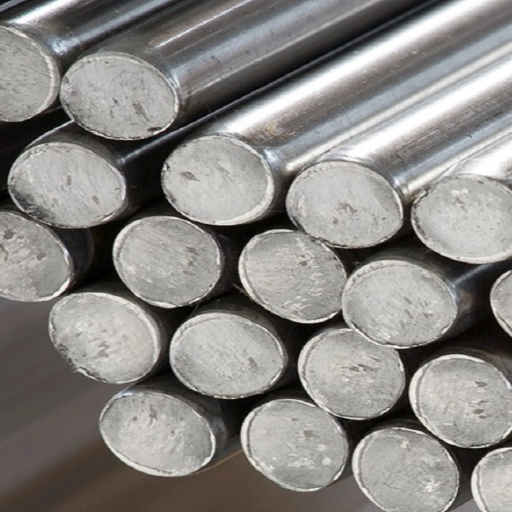
The mechanical properties of the 1018 cold finish round bar are attained through hot rolling followed by cold drawing, which improves the surface finish. Starting with hot rolling, the steel is rolled to the desired dimensions and cooled. Next, the material is subjected to cold drawing, which involves a dimension reduction by pulling the steel through a die. This process improves accuracy, the bar’s surface finish, and tensile strength. Lastly, the bar is stress-relieved to minimize internal stresses, which ensures good machinability and consistency in the mechanical properties.
Cold Drawing Process for 1018 Steel
This is done through a specific sequence of actions to guarantee optimal specifications, exact properties, and mechanical characteristics for 1018 steel’s cold drawing. In the first step, hot rolling gives the 1018 steel some basic shape, followed by cooling and drawing, which involves pulling the material through one or more dies. The cold drawing process enhances yield and tensile strength while vastly increasing the surface finish.
Aspects for cold-drawn 1018 steel typically include the following:
- Tensile Strength: Roughly 440 MPa (64,000 psi)
- Yield Strength: Roughly 370 MPa (53,000 psi)
- Elongation at Break: 15–20%
- Surface Finish: 32-63 μin Ra (microinches Roughness average)
All attributes of 1018 steel highlight its value for advanced precision engineering that requires repeatability, uniformity, and extreme strength for parts like gears, shafts, and pins. This, along with the fact that cold-drawn 1018 steel bars are usually no more than ±0.002 inches in diameter, makes them ideal for further machined mechanical components.
Finishing Process and Tolerance Standards
Finishing 1018 Steel is usually a multi-step process incorporating various operations to improve dimensional and surface accuracy. Grinding, polishing, and coating are some of the most popular finishing strategies, which enhance the material’s surface and anticorrosive quality. A standard cold-drawn 1018 steel bar gains a surface roughness range of 32 to 63 μin Ra, but for specialty uses, processes such as fine grinding can bring roughness down to below 16 μin Ra.
The dimensional tolerances of cold-drawn 1018 steel are typically maintained at ±0.002 inches. This accuracy is attained through meticulous control during the drawing and finishing operations. For example, outer diameter tolerances for certain round bars are frequently refined to the ASTM A108 limits toward the outer boundaries of the range. Also, straightness and concentricity of the rounds are critical, with the best results being around ±0.003 inches per foot on straightness over long spans of standard lengths.
For some applications that require specific features or additional coatings, finishes such as black oxide or zinc plating may offer enhanced aesthetics and better corrosion resistance. In general, 1018 steel has controlled machining processes and tight tolerances, which make it dependable for highly stressed automotive, aerospace, and industrial machinery components.
From Low Carbon Steel to Cold Finished Product
The materials first undergo a detailed and controlled process to enhance the properties of low-carbon steel. Transformation starts with hot rolling, cooling, and then subjecting it to cold drawing or turning. These processes improve the steel’s superficial aspects, including its dimensional accuracy and mechanical properties such as tensile and yield strength.
Key properties of cold-finished 1018 steel include the following:
- Carbon Content: At or around 0.15% – 0.2%
- Tensile Strength: Upper Estimate is Approximately 63,000 psi
- Yield Strength: Around 53,000 psi
- Surface Finish: Smoother than 63 microinches
- Straightness Tolerance: ±0.003 inches dominated per foot for standard lengths.
Due to its high strength and elevated machinability, cold-finished 1018 steel is perfect for high-precision applications. The entire process, from design through manufacturing, is optimized for assured consistency and adherence to durable industry benchmarks.
What Applications Is 1018 Cold Finish Steel Round Bar Best Suited For?
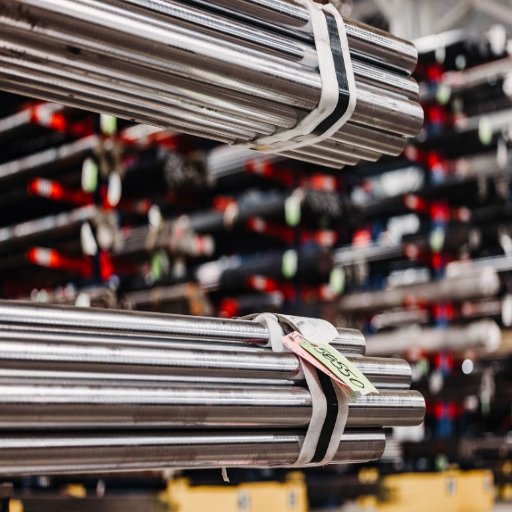
Due to understanding consumer needs, the 1018 cold finish steel round bar is always an excellent choice for tools requiring precision, high-level machining, outstanding mechanical properties, and other high standards, given its use in equipment manufacturing. In automotives, aerospace engineering, construction robotics, and many different fields, the tools must be strong and reliable, and this round steel bar is used. Moreover, it is versatile enough to be used for making screws, bolts, pins, machinery parts, tools used for fixing robots, and even components of robots themselves.
Machinability and Fabrication Advantages
I believe this material’s impedance on machining equipment would be lower than that of other construction materials. Tools like screwdrivers, welding machines, and others that require numerous processes to be done with the part will perform better when aided by this bar. Since it is compatible with so many tools, the performance expected to be achieved would be highly relied upon.
Weldability and Cold Forming Capabilities
Welds made using processes like MIG, TIG, and resistance welding can be done with this material with the expectation of sturdy connections. Its ability to withstand stress from welding is superb while at the same time maintaining low chances of cracking and forming holes, which increases the overall quality of the connection. If the outer sections of the device being welded are thicker, warming them before the joining procedure can improve the weld quality even more.
The material exhibits excellent ductility and defines its forming capability characteristics. It can be easily bent, rolled, or stamped into intricate shapes without considerable cracks or fractures. For appropriate precision and balance, post-process heat treatment helps relieve stresses, improving the overall strength. However, the preferred cold-forming temperature usually ranges between 5°C and 30°C to maintain accuracy and structural integrity.
Combining these properties and adaptability further enhances the material’s versatility in various industrial applications.
Industries That Commonly Use 1018 Cold Rolled Steel
Due to its finest surface finish, 1018 processed steel is widely used in the automotive industry to construct parts like gears, shafts, and pins where strength and precision are vital. Additionally, 1018 steel forms structural components and frameworks because of its uniform properties and durability. Besides those, it is also a popular choice in machinery and tool manufacturing due to a balanced combination of its hardness and ductility.
- Tensile Strength: Around 440 MPa (64,000 psi)
- Yield Strength: Around 370 MPa (53,700 psi)
- Elongation in 2 inches: 15-20%
- Hardness (Brinell): approximately 126
- Machinability Rating: 78% based on 1212 steel as 100
These values ensure that 1018 steel fulfills the needs of industries that need high-performance, reliable, and adaptable materials.
How Does 1018 Cold Finished Steel Compare to Other Metals?

1018 cold-finished steel is exceptional in its strength, machinability, and cost-effectiveness. While 1018 is more straightforward to machine and less expensive, it offers significantly lower corrosion resistance than stainless steel. Compared to alloys such as 4140, 1018 has lower tensile and yield strength but is more weldable and ductile, making it more appropriate for fabrication-these applications. 1018 is also well-known for precision components in various industries because it outperforms most other low-carbon steels with a machinability rating of 78%.
Tensile and Yield Strength Compared to Other Grades
According to my data, 1018 steel tends to have lower tensile and yield strength than higher-grade alloys like 4140 and 1045. To illustrate, 1018 features a tensile strength of approximately 440 MPa and yield strength of 370 MPa, while 4140 commonly surpasses 655 MPa for tensile strength. Regardless of what 1018 lacks in strength, it makes up for superb weldability, ductility, and machinability. These characteristics make 1018 more appropriate for fabrication-intensive applications, while other high-strength steels are better for heavy loads or high-stress environments.
1018 Cold Finish vs. Hot Rolled Carbon Steel
Between selecting 1018 cold finish or hot rolled carbon steel, I would go for 1018 cold finish if tighter tolerances, improved mechanical properties, and smoother surface were required for a machining or forming application—improvement in the dimensional accuracy and surface quality of 1018 cold-finished steel results from undergoing additional processing. On the contrary, hot-rolled steel is economically favorable since it is more suited for coarse, large-structured surfaces with a big-scale surface finish, precise dimensions, and a small margin of error.
Let us examine:
- Surface finish: 1018 cold finish has a smoother surface, while cold-rolled steel is rough and scaly.
- Dimensional tolerances: Hot-rolled steel roughly exceeds aligned measures by 1 mm, whereas cold-finished steel struggles to exceed 0.5mm.
- Yield strength:
- 1018 cold finish (approx.): 370 MPa
- Hot rolled steel (varies, typically lower, and depends on grade)
- Tensile strength:
- 1018 cold finish (approx.): 440 MPa
- Hot rolled steel (varies, typically lower, and depends on grade)
- Cost: Hot-rolled steel is generally less expensive.
At the end of the day, which one to select is determined chiefly by which direction the project leans towards, whether that be a sharp focus on precision, surface quality, or cost.
What Is the Difference Between 1018 Cold Finish Round Bar and Flat Bar?
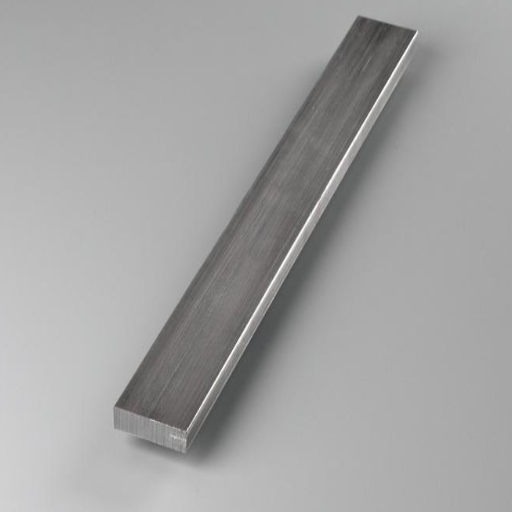
Cold finish 1018 flat bar and round bar differ mainly in shape and intended use. Round bars are symmetric and, as such, are used for shafts, fasteners, or gears. Flat bars have a rectangular cross-section and find purpose in structural parts, braces, and frameworks. Both are made from the same 1018 cold-finish steel with similar mechanical properties. The preference between the two comes down to the shape and dimensions required for the specific project.
Comparing Cold Roll Round Bar vs. Steel Flat Bar Applications
Due to their structural design, cold-roll round bars and steel flat bars differ significantly in functionality. Round bars help with rotational movement, uniform stress, or stress concentration, which can be found in drive shafts, pinions, and dowels. Their shape allows for precise machining, making them suitable for the manufacture of tools and mechanical components.
Flat bars have a rectangular cross-section, which allows for strong construction support. They are widely used in welded and construction frameworks and braces. Their flat shape increases their usability for bolting, welding, or cutting, which is helpful for baseplates, brackets, and trim parts.
- Material Tensile Strength:
-
-
- Both Cold Finish Steel bars tend to have a tensile strength of about 64,000 psi, around 440 MPa.
-
- Yield Strength:
-
-
- Both Round and Flat Bars show an average yield strength of 54,000 psi, which is approximately 370 MPa, suggesting they can endure stress for a more extended period.
-
- Dimensional Tolerance:
-
-
- Cold Roll Round Bar is known for offering tighter dimensional tolerances, such as ± 0.001″ after machining.
- For Flat Bars, tolerances are typically broader, such as ±0.005″ on the width.
-
Both materials depend on a project’s particular mechanical specifications and design needs. Round bars benefit rotational precision applications, while flat bars are preferred for static load-bearing and structural components. The uniform microstructure that results from the cold rolling process provides strength and ensures easy machining.
Choosing Between 1018 Cold Rolled Steel Flat and Round Profiles
The applications are the first thing that comes to mind when considering 1018 cold rolled steel flat and round profiles. If a specific project requires rotational parts like shafts or gears, then round bars are the ideal choice due to their higher symmetry, which offers balance and rotation. Flat bars are preferable for structural or flat load-bearing components as they provide better surface stability and support.
Consider tolerances and mechanical properties for the two features:
- Tolerances:
-
-
- Round Bar Diameter Tolerance: ±0.002 inches.
- Flat Bar Width Tolerance: ±0.005 inches.
-
- Mechanical Properties (for 1018 cold rolled steel):
-
-
- Yield Strength: ~53,700 psi.
- Tensile Strength: ~63,000 psi.
- Brinell Hardness: ~126.
-
Both profiles have the advantages of cold rolling, which include improved strength, machinability, and microstructure uniformity. Knowing these parameters enables me to make informed choices about which profile will perform optimally and efficiently for the job.
References
Frequently Asked Questions (FAQ)
Q: What are the key characteristics of a 1018 cold-finished bar?
A: 1018 cold-finished bar is a low-carbon steel with good machinability, weldability, and strength. It typically contains 0.18% carbon, which gives it a balanced combination of toughness and ductility. The characteristics of 1018 cold-finished steel include improved surface finish, tighter size tolerances, and higher tensile strength compared to hot-rolled versions. It also offers good case-hardening properties and is suitable for a wide range of applications requiring moderate strength and excellent formability.
Q: How does the cold finishing process affect the properties of 1018 steel?
A: The cold finishing process significantly enhances the properties of 1018 steel. Cold drawing increases the tensile strength and yield strength while slightly reducing ductility. The process produces a smoother surface finish with improved dimensional accuracy and tighter size tolerances compared to hot-rolled steel. Additionally, cold finishing creates a strain-hardened outer layer that provides better machinability and wear resistance, making 1018 cold-drawn steel bars ideal for precision components and applications requiring consistent material properties.
Q: What makes 1018 suitable for machining applications?
A: 1018 steel is helpful for machining applications due to several factors. As a low-carbon steel with good machinability, it can be easily cut, drilled, and formed using standard tooling. The cold drawing process improves machinability by creating a more uniform microstructure and hardness. 1018 produces clean cuts with good chip breaking and offers an excellent balance between machinability and strength. While not as machinable as free-cutting steels like 1215, it provides superior strength and weldability, making it a preferred choice for machined components requiring structural integrity.
Q: What is the tensile strength of a 1018 cold finish steel round bar?
A: 1018 cold finish steel round bar typically has a tensile strength of 63,800-80,000 PSI (440-550 MPa). Cold-drawn versions tend to have higher tensile strength values than their hot-rolled counterparts due to the work hardening that occurs during the cold-finishing process. The yield strength usually ranges from 53,700-72,500 PSI (370-500 MPa), with an elongation of about 15-20%. These mechanical properties make carbon steel round bar 1018 suitable for applications requiring moderate strength and reasonable ductility and toughness.
Q: How well does the 1018 cold-drawn steel bar weld?
A: 1018 cold-drawn steel bar welds exceptionally well due to its low carbon content (typically 0.18%). It can be welded using all standard welding processes, including MIG, TIG, stick welding, and oxyacetylene. The material responds well to welding without requiring extensive pre-heating or post-weld heat treatment in most applications. However, as with all carbon and alloy steels, proper welding procedures should be followed to prevent distortion or heat-affected zone hardening. The excellent weldability makes 1018 a versatile option for fabricated structures and components.
Q: Is 1018 cold finished bar especially suited for cold forming and bending?
A: The 1018 cold-finished bar suits cold forming and bending operations. Its relatively low carbon content (0.18%) provides excellent ductility and formability while maintaining adequate strength. The material can handle moderate to complex forming operations without cracking, though severe bends may require stress relief. The cold drawing process gives the material consistent properties throughout, which helps predict forming behavior. These characteristics make 1018 cold-finished steel ideal for applications requiring formed components like brackets, clamps, pins, and other parts that undergo bending or forming during manufacturing.
Q: How does 1018 cold-finish steel compare to hot-rolled versions?
A: 1018 cold finish steel offers several advantages compared to hot-rolled versions. Cold-finished steel has a smoother surface finish with closer dimensional tolerances (typically ±0.002″ or better), while hot-rolled material has a rougher mill scale surface with wider tolerances. Cold finish steel round bar 1018 exhibits higher strength values due to work hardening during the cold drawing process. It also provides better machinability, straighter bars, and improved corner radii. However, hot-rolled 1018 is typically less expensive, has less internal stress, and may be more suitable for applications where precise dimensions and surface finish are less critical.
Q: What applications are 1018 cold-finished steel round bars commonly used for?
A: 1018 cold-finished steel round bar is widely used across numerous industries. Typical applications include shafts, pins, studs, gears, sprockets, dowels, spacers, and machine parts. It’s frequently used in automotive components, agricultural equipment, general manufacturing, construction equipment, and conveyor systems. The material is also popular for fixtures, jigs, and tooling applications where moderate strength and good machinability are required. Due to its excellent balance of properties and cost-effectiveness, the 1018 cold-drawn steel bar is a go-to material for many engineers and manufacturers when designing parts that don’t require the higher performance of alloy steels.


